Showing posts with label Technical Rubber GraftingRubber Plantation. Show all posts

Thursday, 8 March 2012

How to Select a Good Rubber

Rubber material that is suggested plant material propagated clones grafting. Compared with seedlings seedlings, the use of clonal planting material is very advantageous because the higher productivity of plants, the plants do not produce faster, more uniform plant so that production in the first tapping higher secondary as well as having the desired properties such as relatively resistant to certain diseases, stem robust , responsive to stimulants and fertilizers, as well as high volumes of timber per tree.

How to Solve Pest Boars in Rubber

Hama boar is often become a serious problem for a very pig likes petani.Hama into the plantation at night is very damaging to the rubber or rubber rods break too young to eat gum leaves.

Friday, 24 February 2012

Natural and Synthetic Rubber differences.

Natural and Synthetic Rubber differences.Currently used in industrial rubber comprises natural rubber and synthetic rubber. The use of synthetic rubber is higher than the amount of natural rubber. Has advantages such as synthetic rubber resistant to various chemicals and the price tends to remain stable. In terms of procurement, synthetic rubber rarely have problems sending or supplies of goods.

Although today's natural rubber production and consumption amounts far below the synthetic rubber or artificial rubber factory,

Thailand's Rubber

Thailand's Rubber

rubber prices in Tokyo trading yesterday on the increase driven by the approval of the Government of Thailand to shore up prices, coupled with a weaker yen, which provides support to the increase in prices. In stock Tocom, Rubber prices for June delivery contract closed at 316.5 yen, an increase of 2.3 yen (0.7 percent).
The price increase is driven by information that states that the Thai government is the world's largest rubber producer, on Tuesday (24/1) approve a budget of 15 billion baht (477 million U.S. dollars) to buy rubber USS3 types of farmers.

FARMERS ASKED TO IMPROVE THE QUALITY OF RUBBER

 FARMERS ASKED TO IMPROVE THE QUALITY OF RUBBER

Barat Bangka farmers, the province of the Pacific Islands, are required to improve the quality of rubber to keep prices stable. The request was presented the Forestry and Plantation Barat Bangka.
"Many farmers are not able to maintain quality by increasing the use of alum and water mixture, so that low-quality rubber," said Head of Estates on Barat Bangka Dishutbun, Darmono in Muntok, Sunday (20/11).

The Growth of Indonesia's Natural Rubber Exports

The growth of Indonesia's natural rubber exports

Indonesia's natural rubber exports growth over the last six years (2000-2005) is about 7.96%. The growth of Indonesia's natural rubber exports tend to be stable, while the value of exports fluctuated as they relate to the export price of rubber. Indonesia rubber export price is highly dependent on international natural rubber prices, supply and demand. and competitiveness of Indonesia's natural rubber exports in comparison with exports from other exporting countries, like Thailand and Malaysia.

Indonesia Rubber Export

 Indonesia Rubber Export

Medan, Indonesian - The volume of rubber exports of North Sumatra Province from January to November 2011 rose 5.4 percent over the same period last year, reaching 495 046 042 kilograms."The increase in export volume is encouraging and is expected by 2012 this will rise again because of the need to increase despite the global crisis is still being felt," said Executive Secretary Company Rubber Association of Indonesia (Gapkindo) of North Sumatra, Edy Irwansyah, in Medan.

Friday, 17 February 2012

Mixed Rubber Plantation Management System

Average tapped rubber plantations began at the age of 10-15 years. Slash and methods used for the maintenance of rubber plantations is a method of slash and clearing the hall with the frequency of irregularities. Since the last 3 years, the people doing an intensive cleaning of the garden in an old rubber plantation to plant rubber with insertion system.
Most of the rubber farmers in this village own initiative to make rubber nurseries (private owned) to meet the needs of rubber planting in the garden each. Plant species are allowed to live in the garden include Medang, chelates, meranti, jelutung and other economic types. Farmers tend to maintain some economically valuable tree species such as kempas, keranji, meranti, jelutung, chelates.

Rubber and its Contents

Rubber is a hydrocarbon polymer latex is contained in some plant species. The main source of production of rubber in international trade are or Hevea brasiliensis (Euphorbiaceae tribe). Several other plants also produce latex with a slightly different properties of rubber, such as ara-member tribe araan (eg fig), brown-sawoan (eg gutta percha and brown manila), other Euphorbiaceae, and dandelion. During World War II, these sources are used to fill the vacancy of the rubber supply. Now, gutta-percha used in medicine (guttapercha), while the tan manila commonly used latex for chewing gum (chicle). Rubber industry can now be produced synthetically and became rivals in the rubber industry.

Types and Various kinds of Rubber

Natural rubber in the world 70% is produced in Indonesia, Malaysia, and Thailand. Natural rubber obtained from Hevea brasiliensis rubber tree tapping a liquid rubber called latex. Rubber is needed in their daily lives ranging from household to industrial needs. Mostly used in the manufacture of rubber hoses and tires (about 50% more).

Types of rubber:Crepes originated from latex, rubber lump, or RSS of low quality. How to make it similar to the RSS different is to remove the dark brown color of dry rubber. Then the result is a white rubber grinding machine using a sheet of thin crepes pengiling.

How to Take the Rubber

Taking Rubber
Menderes or in Java (Indonesia) known as the tap is the result of the activities taking rubber (Hevea brasiliensis) using a special knife in the trunk of rubber latex that can be taken. activities can be carried out at a rubber plant that has been aged five years, conducted in the morning, the morning the more latex that came out.  done by cutting the phloem vessels so that the latex out a lot, in the morning, because it has high humidity so that the leaf turgor pressure becomes high, which in turn makes more phloem vessels and that's when we start cutting Menderes or phloem vessels, resulting in the production a lot of latex. It should be noted that the quality of every day knives deresnya always sharp. Taking rubber is an art, because not everyone can , one-one instead of rubber to be damaged.

Tuesday, 14 February 2012

The Benefits of Rubber Seeds

Rubber Seeds
" The Benefits of Rubber Seeds "

There are many benefits that can be taken with the use of rubber seeds that never dioleh and specially developed, especially in the province of Jambi. In general, the diktahui by simply taking the sap from the rubber rod or often called a tap. In fact, things - things to know in the process of tapping less known to the public, so the quality of rubber produced less good.If we look at the composition of rubber seed oil contains so much, there should be a better utilization of the processing of rubber seeds. With a land area of ​​rubber plantations in Jambi province, then it certainly can be easily overcome the energy crisis of its own in an increasingly haunting. Especially with the shadow - the shadow that the energy derived from fossil was not reliable anymore. As for some of the alternative energy produced from the raw material of rubber seeds is as follows.These materials can be sourced from the waste to be utilized in the manufacture of charcoal briquettes. One of the waste material is shell rubber seed oil. The process of making charcoal briquettes from rubber seed shell as follows:

a. Prepare the starting material for the manufacture of rubber seed shell biobriket that has been milled with a hammer mill.Therefore, these conditions must be balanced with efforts BioEnergy innovation fuels that have a better quality than biobriket. The quality is basically the parameter values ​​can be measured from the burning of calories and pollutant gas emissions.

The Selected Land for Rubber Planting

Basically the rubber plants require the terms of climatic conditions for growth and soil conditions as the growth media.
ClimateAreas suitable for rubber plants is on the zone between 150 and LS 150 LU. Beyond that somewhat hampered the growth of rubber plants that began production too late.RainfallRubber plant requires optimal rainfall between 2,500 mm to 4,000 mm / year, with rainy days ranges from 100 to. 150 HH / year. However, if frequent rain in the morning, the production will be reduced.
High placesBasically the rubber plants grown in optimal lowland with an altitude of 200 m above sea level. Altitude> 600 m from the sea surface is not suitable for growing rubber trees. Optimal temperature range between 250C required to 350C.

Stem and Root Disease in Rubber

White Root disease Rigidoporus microporus

White root disease caused by a fungus Rigidoporus microporus (Rigidoporus lignosus). These diseases result in damage to plant roots. Symptoms on leaves appear pale yellow and the edge or tip of the leaf folded into. Then the leaves fall and the end of the branch to die. There are times when formed young leaves, or flowers and fruit early. On plant roots seem ill-colored threads of white mushrooms and a bit thick (rizomorf). Sometimes mushroom fruit body forming a cap-like yellowish orange at the base of the plant roots. In severe attacks, the plant roots to rot so easily uprooted plants and dead. Crops often creeping death on neighboring plants. Transmission of the fungus usually takes place through contact to tunggultunggul healthy plant roots, the remaining root or roots of plants diseased plants. White root disease is common in 1-5 year old rubber plantation, especially in the bush, many of the remaining stump or roots of plants and in loose soil or sand. Treatment of diseased plants should be done at the time of the attack early to get treatment success and reduce the risk of plant death. When treatment is done at the time of the attack continued success of treatment only reaches below 80%. How to use and type of recommended fungicides are recommended:

"Rubber Chips" Spectacular Energy Sources

Chip
 Rubber Chips

Princeton University engineers can take advantage of the films (thin layer) of naturalrubber so sophisticated tools to power mobile phones and other electronic devices. Chips of rubber material, they also turn it into chips that are able to follow the movements of body flexibility, such as respiratory movements, walking, even into energy pacemakers.

Rubberchips are converted into material composed of ceramic nanoribbons and then implanted into a silicon rubber sheet and capable of generating electrical energy when flexed and highly efficient in converting mechanical energy into electrical energy. Placed near the lungs, the sheet of material containing this energy can help the movement of respiratory or cardiac pacemakers. This will avoid the need for battery replacement after surgery.

Monday, 13 February 2012

Rubber Marketing

Rubber is an export commodity that is able to contribute in the efforts to increase foreign exchange Indonesia. Indonesia rubber export since 20 years ago increased from 1, 0 million tons in 1985 to 1.3 tons, in 1995 and 2.0 million tons from 2.2 million tonnes of rubber production in 2005, so that foreign exchange earnings from rubber commodity in the first half of 2006 reached U.S. $ 2.0 billion.
 
The area of ​​rubber plantations in Indonesia reached 3.2 million ha in 2005, mostly scattered in Sumatra and Kalimantan, of which 85% is rubber.
Rubber prices improved at this time should be a momentum that can push
acceleration, improvement and rejuvenation of the rubber is less productive by using a clone - a clone superior cultivation and other technological improvements.

To enhance the role and competitiveness of rubber, an effort that must be done through improving the quality of the material if the rubber. On the basis of these things the government has established Guidelines for Materials Processing and Marketing Sports Rubber (BOKAR).

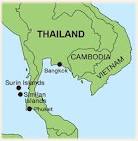
Rubber plantations: Indonesia to establish cooperation with Thailand and Malaysia

Rubber plantations: Indonesia to establish cooperation with Thailand and Malaysia
 
 To control the price of rubber in the international market. The three countries agreed to form the International Tripartite Rubber Council (ITRC) is the organization that regulates the supply (supply) and demand (demand) that affect the world rubber price fluctuations, said Director General of Plantations Achmad Mangga Barani in Jakarta. Mangga Barani said Indonesia set a floor price or the lowest benchmark level of U.S. $ 1.6 per kilogram, and the tripartite agreement has been running since six years ago, while the benchmark price related evaluation per year. If the price falls below the level of U.S. $ 1.6 per kilogram (kg), the three countries will simultaneously reduce the production and supply to world markets, obviously Mangga Barani. He said if rubber prices below U.S. $ 1.6 per kg then there should be no country that sells. Current prices are in the range of U.S. $ 3.2 per kg, so the three countries are free to sell their products. Thus, Manggabarani said, when the price is below the benchmark, then the three countries joined the International Tripartite Rubber Council or the ITRC was not allowed to sell gum, and even take action to reducing the production of rubber. It was to keep the price of rubber in the international market is down, he said.

Technical Rubber Grafting

Technical Rubber
Technical Rubber Grafting 
Grafting of the rubber tree is a series of attempts to obtain a good planting material and a circuit that can not be separated from selection of seeds and germination.There are 2 kinds of grafting the green grafting (budding green) and grafting cacao (brown budding). Green grafting carried out on seed age 5-6 months and 9-10 months old brown grafting.a. On the green grafting: entres obtained from the branch with 2 5-6 month old umbrella with fresh dark green umbrellas.b. In the grafting of chocolate: held on 9-10 month old seedlings. Entres used 6-12 months old and brown.In connection with the availability of seeds in the gardens of Central Java in March / April so that timely planting into polybags and seedlings ready to be available 2-3 Ducts brown umbrella grafting using a system of budding / grafting brown.

Grafting tools- A sharp grafting knife- Plastic Bandages for dressing a window on the lower stem- Trunk banana to put wood entres- Wipe clean hands wrapped dipergelangan to clean grafting knife.- Wipe to clean the sap on the lower stem and wood windows entres- Sharpening stone for sharpening knives grafting